Inclusion is one of those areas in school leadership where the conversation can quickly become dominated by process, paperwork and provision mapping. All of those things matter, of course, but over time I’ve found myself returning to a much simpler question: what does inclusion actually look like for a student sitting in a classroom on a Tuesday morning?
As a senior leader, I’ve worked across enough contexts to know that there is no single answer. SEND is not static, schools are not static and effective practice continues to evolve. That is part of what makes the work both challenging and professionally rewarding. Even as an established leader, I think there is a real responsibility to keep learning, particularly in an area as nuanced and important as inclusion.
One area I’ve become increasingly interested in is the role technology can play in improving access to learning. Not as a gimmick, and certainly not as a substitute for good teaching, but as a practical tool that can quietly remove barriers for students who might otherwise struggle.
Access should not feel exceptional
One of the traps schools can fall into is treating support tools as something reserved for a small group of identified students. Whilst targeted support will always have its place, I think we should be asking harder questions about what excellent universal provision looks like.
When a student is finding learning difficult, our first instinct can often be to look towards intervention. A more useful question, however, may be whether some of those barriers could be reduced earlier through stronger universal classroom provision, before additional support becomes necessary.
That shift in thinking matters.
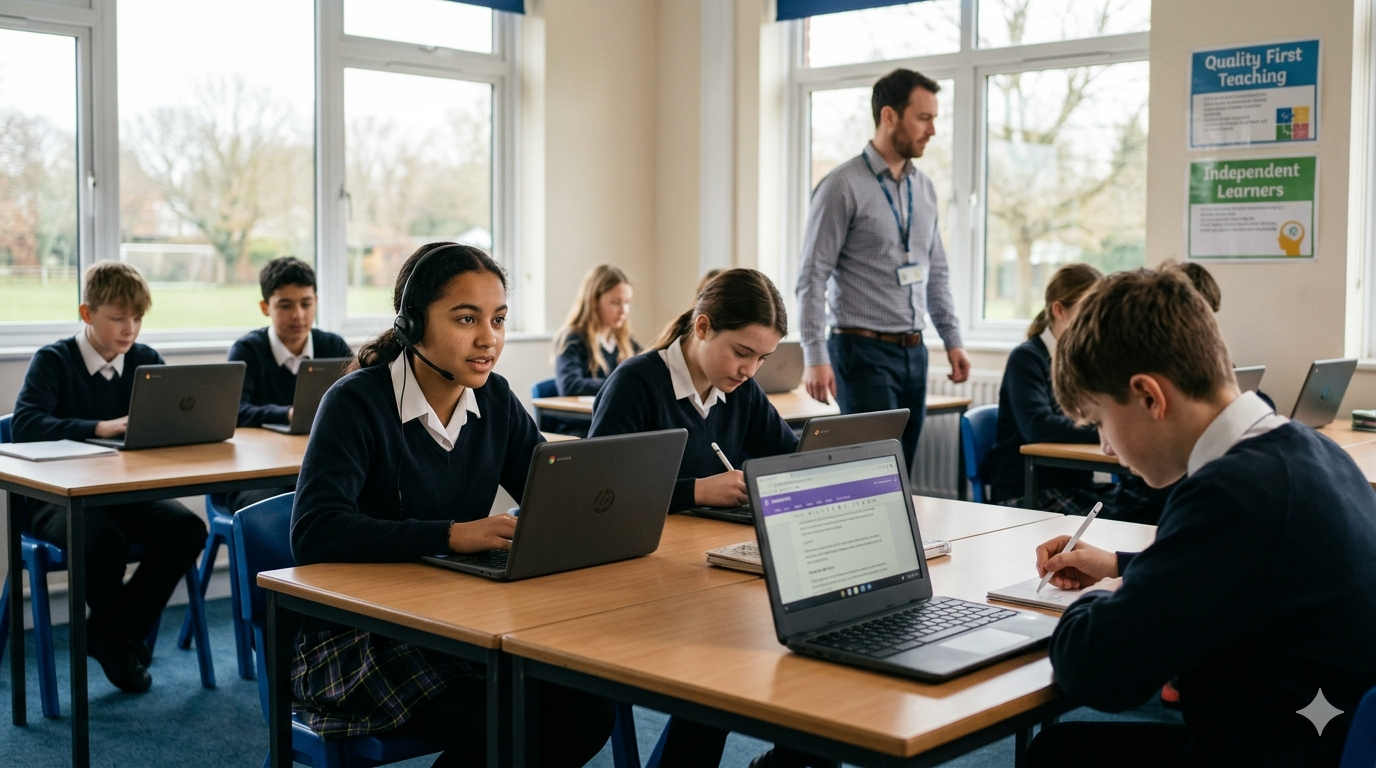
In our setting, all students have access to Chromebooks. That was not introduced specifically as a SEND strategy, but the inclusion benefits have been significant. When access is universal, support becomes normalised. Students are not singled out for using tools that help them succeed; they simply access the same systems as everyone else, in ways that work for them.
That might seem like a small distinction, but culturally, it makes a real difference.
The practical difference technology can make
Some of the most effective inclusion tools are not particularly flashy.
The Read&Write toolbar, for example, has become a genuinely useful accessibility tool for many students. Features such as text to speech can make written content far more accessible for students with reading difficulties. Speech to text can support those whose ideas outpace their ability to record them. Vocabulary support and picture dictionaries can reduce the frustration that often comes with unfamiliar academic language.
For some students, these tools are transformative.
What matters to me, though, is not simply that the tools exist. It is what they enable students to do independently.
A student who can listen to instructions rather than relying on repeated adult explanations is gaining more than access, they are gaining confidence.
A learner who can structure written responses digitally instead of becoming overwhelmed by the mechanics of handwriting is able to focus on thinking.
That independence is important.
Good technology does not compensate for weak teaching
This is probably the most important point. Technology, in itself, is not inclusive practice.
I have seen schools invest significantly in devices and software with the very best intentions, only for the impact to be inconsistent because the implementation has not been thought through carefully enough. Access to technology is one thing; meaningful access to learning is something else entirely.
A Chromebook on every desk does not automatically create inclusion. Neither does a suite of accessibility tools if staff are unsure how, when, or most importantly why they should be used.
The fundamentals still matter.
If classroom routines are inconsistent or expectations are unclear or if students are spending too much energy simply trying to work out what they are supposed to be doing, technology will not solve that problem. Equally, if vocabulary is not explicitly taught, scaffolding is poorly planned or learning activities are not designed with accessibility in mind the presence of technology becomes largely superficial.
Strong inclusion still begins with strong teaching.
That means maintaining a relentless focus on Quality First Teaching is essential. Predictable entry and exit routines matter because they reduce anxiety and support readiness to learn. Clear professional habits create consistency for students who thrive on structure. Pre-teaching vocabulary and using keyword glossaries can make a significant difference for learners who may otherwise struggle to access subject specific language. Thoughtful seating plans are not simply about behaviour management, they are about attention, regulation and creating the conditions for success.
The same applies to learning plans. At their best they give staff practical insight into what genuinely helps a student succeed in the classroom. At their worst they become lengthy documents that exist more for compliance than implementation. The challenge for leaders is ensuring that these systems remain accessible and rooted in classroom practice.
Professional development is a critical part of this. We cannot assume that providing technology automatically builds staff confidence in using it effectively. Staff need opportunities to explore what adaptive teaching looks like in practice, to share strategies and to refine their approach over time.
When these foundations are secure, technology becomes far more powerful.
Independence should always be the goal
Something I’ve reflected on more in recent years is the difference between support and dependency.
Teaching assistants are hugely important, and I would never suggest otherwise. But if our systems mean students cannot function without constant adult prompting, then we have to question whether we are building independence effectively enough.
Technology can help shift that balance.
A student using speech to text independently may no longer need someone to scribe.
A student revisiting lesson instructions through Google Classroom may not need repeated verbal reminders.
A learner accessing reading support through digital tools can often navigate tasks with far more autonomy.
That does not remove the need for skilled adult support. It simply means that support becomes more purposeful.
Leadership means staying curious
SEND leadership can be humbling.
Just when you think you have embedded effective systems, a new cohort arrives with different needs, or a conversation with staff or families challenges your assumptions.
That is exactly how it should be. Experience matters, but so does professional curiosity.
The longer I spend in leadership, the more I believe inclusion work is less about having definitive answers and more about being willing to keep refining the questions.
Technology is not a silver bullet. But used thoughtfully within strong classroom practice, it can make a genuine difference to how students experience school.
And if our aim is to create classrooms where more students can access learning successfully, more independently and with greater confidence, that feels like a conversation worth continuing.